Posts in character education
Self-Control Bible Lessons for Kids

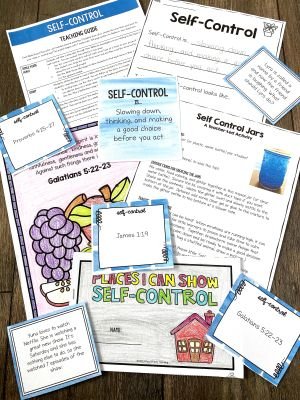
Teaching self-control is an essential part of biblical character education for kids, helping them learn to manage emotions, make wise choices, and grow in faith. Through Scripture-based lessons, engaging activities, and meaningful discussions, children can discover how God’s Word guides them to practice patience, restraint, and self-control in everyday situations.

How do you define self-control for kids?

Self-control is when you slow down, think, and make a good choice before you act. So often, we want to react impulsively. Kids push when someone approaches too closely, grab the toy they want to play with, and scream when they are upset. Adults also struggle with self-control, but it may manifest in different ways.  

When we exercise self-control, we take time to reflect on our choices and make decisions that show kindness to others and to ourselves. 

Self-Control Bible Lesson for Kids

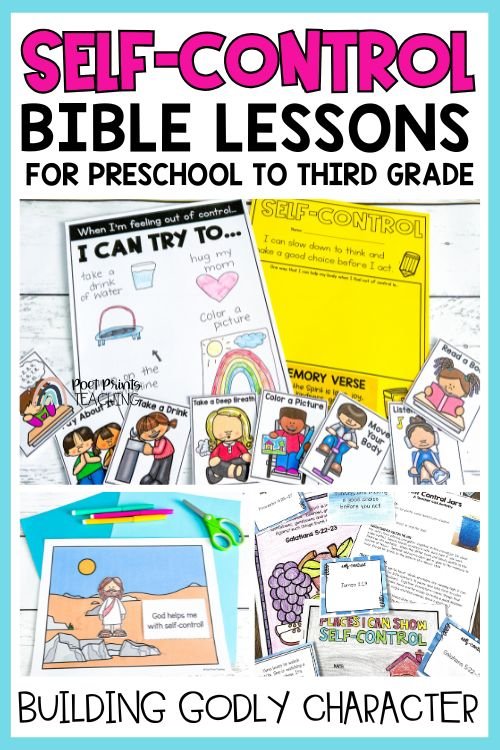
Are you looking for an engaging way to teach children about what the Bible says about self-control? Use the Bible story of Jesus Tempted in the Desert to help facilitate the learning. Our scripted lessons, printable crafts, and discussion questions are a great resource to help kids learn about this important character trait.

(Click HERE for the 2nd, 3rd, and 4th grade version!)

or, shop self-control bible lessons for older kids on TpT
or, shop self-control bible lessons for little learners on tpt

WHAT DOES THE BIBLE SAY ABOUT self-control?

The Bible has a lot to say about self-control, especially in our interactions with others and in the face of temptation.

We will face temptations in our lives. Temptation is the desire to do something we shouldn’t, something that goes against what God would want. It isn’t a sin to be tempted, but it is a sin to act on it. One way to resist temptation is to exercise self-control. When we can control our actions, we can resist temptation. 

The good news is that self-control is a Fruit of the Spirit. As we draw closer to God and His Spirit, we are promised help with self-control.

Here are some Bible verses about self-control:

  • James 1:19 - “My dear brothers and sisters, take note of this: Everyone should be quick to listen, slow to speak and slow to become angry.”

  • Proverbs 4:25-27 - “Let your eyes look straight ahead; fix your gaze directly before you. Give careful thought to the paths for your feet and be steadfast in all your ways. Do not turn to the right or to the left; keep your foot from evil.”

  • 2 Timothy 1:7 - “For the Spirit God gave us does not make us timid, but gives us power, love and self-control.”

There are also several Bible stories about people who demonstrated self-control. In Daniel 1, Daniel and his friends demonstrated self-control in their dietary choices while in captivity. David showed self-control by sparing Saul’s life in 1 Samuel 24 and again in 1 Samuel 26. Jesus showed self-control when tempted in the desert in Matthew 4. He also demonstrated self-control when he was led to the cross. He could have called down angels to save him, yet he chose to die for our sins.


HOW DO YOU TEACH KIDS ABOUT self-control?

Lessons and activities to teach bigger kids about what the Bible says about self-control.

Take time to teach children the definition of self-control and explore various examples of self-control. These examples can include stories from the Bible where people chose self-control (or didn’t choose self-control), as well as modern, real-life situations kids may face. 

Discuss these stories and scenarios, then apply the material by having children role-play situations that require self-control. Use hands-on crafts and activities to help them engage with the topic. Before they head home, challenge them to practice self-control throughout the week.


SELF-CONTROL JARS

Showing self-control can be hard! When emotions are running high, it can be especially difficult for little learners to pause and take time to calm down and make good decisions. 

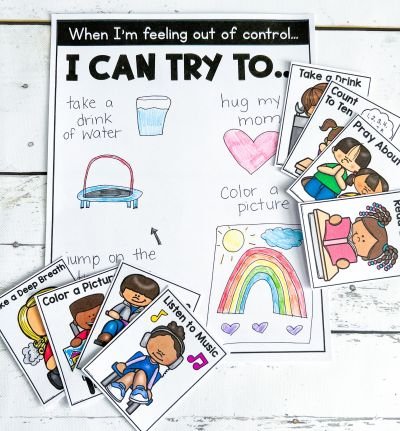
Together, brainstorm some things that might help your class to calm down and be ready to make a good decision. These could include going for a walk, reading a book, counting to ten, hugging a trusted adult/stuffed animal, etc.

Then show them the Self-Control Jar. This is a simple tool that can help kids when they are feeling emotional. When they shake the jar, they can take deep breaths and watch the glitter settle to the bottom. 

For a recipe and instructions on how to create your own Self-Control Jar, check out Self-Control for Little Learners

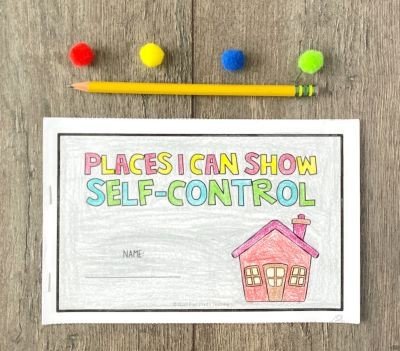
Places I can Show Self-Control Booklet

With children, it is often (always!) helpful to set expectations before going to a place or doing an activity. Similarly, brainstorming how to use self-control in different contexts is a valuable activity. It will help children use their critical thinking to identify different places and the expectations in each. For instance, they can run and scream at a park, but they can’t run and scream at a library. 

Take time to discuss and brainstorm how to use self-control in various places. Then have kids record their thoughts in a printable booklet. Check out Self-Control for Little Learners for pages with dotted lines and space for a picture. And check out Self-Control for Older Kids for pages with sentence starters, lines to finish the sentences, and space for a picture.

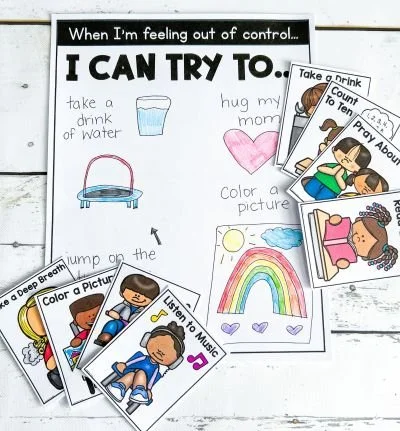
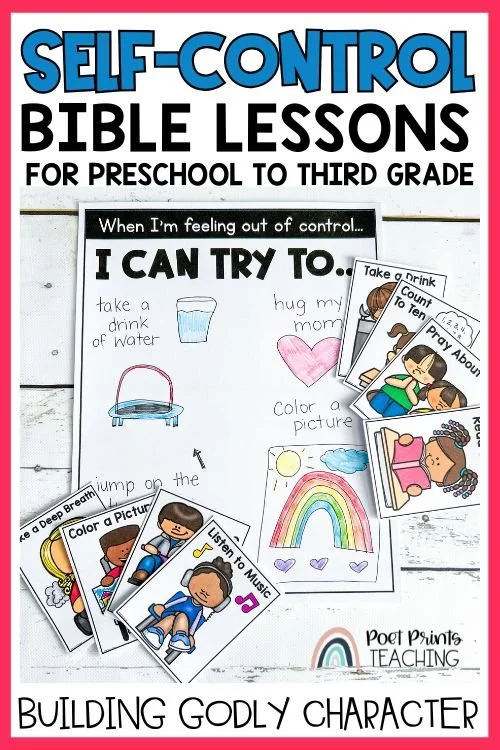
Kids in kindergarten and first grade will use these picture-based cards to explore strategies to help them when they feel out of control.

Bible Sword Drill

Using a Sword Drill to introduce children to the Bible is an effective way to help them navigate the pages of Scripture and understand the relationships among the books of the Bible. A Sword Drill is a simple exercise in which children are given a verse to look up and then must search for it.

To help kids with this, show them where the Table of Contents is in the Bible. Then teach them how to locate the book in the Table of Contents, flip to the page, and search for the chapter and verse. Initially, this will be a time-consuming and awkward task for children to manage. There will be some hand-holding and guidance. However, this is an important skill for children to have, so fostering this skill is worthwhile.

You’ll find printable cards with the verses and lined pages for children to write the verses in the Self-Control Bible Lesson for Older Kids.
BIBLE STORY about Self Control - Jesus Tempted in the Desert

Bible stories are an effective means of teaching godly character traits. Take time to read a story about self-control, discuss it, and complete an activity that connects to the story. 

The story of Jesus being tempted in the desert, found in Matthew 4:1-11, centres around the theme of self-control. 

After reading the story, discuss the concept of self-control. Satan tried to tempt Jesus multiple times, but each time Jesus was able to quote Scripture and do the right thing. Although Jesus was alone in the desert, hungry and likely tired and thirsty, he still demonstrated self-control. 

Next, do an activity to reinforce the learning. The Self-Control Bible Lesson for Older Kids includes a blank one-page comic strip in which children can draw the story events in comic form.

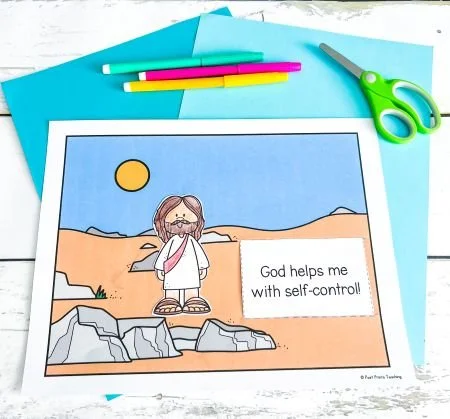
The Self-Control Bible Lesson for Little Learners includes a printable craft of a desert scene. Kids will use the provided pieces to create a scene of Jesus in the desert, complete with a movable piece that says “When I am tempted, God helps me with self-control.” 

MORE Crafts and activities to teach about self-control

  • Self-Control Marshmallow Snack: Have a conversation with children that sometimes self-control can be very hard. We might want something immediately, and waiting can be difficult. Then give each child one marshmallow. Tell them that if they can wait for two minutes, they will get another marshmallow. This is a simple (and tasty) way for kids to practice self-control.

  • Self-Control Traffic Light: A traffic light signals to stop, slow down, and go. This can be a great analogy for self-control because we need to stop or slow down to make a good decision. Create a simple traffic-light craft to serve as a visual aid. Check out Housing a Forest for a simple traffic-light craft using a popsicle stick and construction paper. And Crafting a Fun Life features a traffic-light craft using DIY puffy paint.

  • Pausing Games: Play simple games that require children to move around and then pause. This could be Freeze Dance, Freeze Tag, or Red Light, Green Light. Then help kids connect that this is like self-control. Sometimes we have to pause (or freeze) so we can make a good decision.

WOULD YOU LIKE MORE LESSONS ABOUT building godly character?

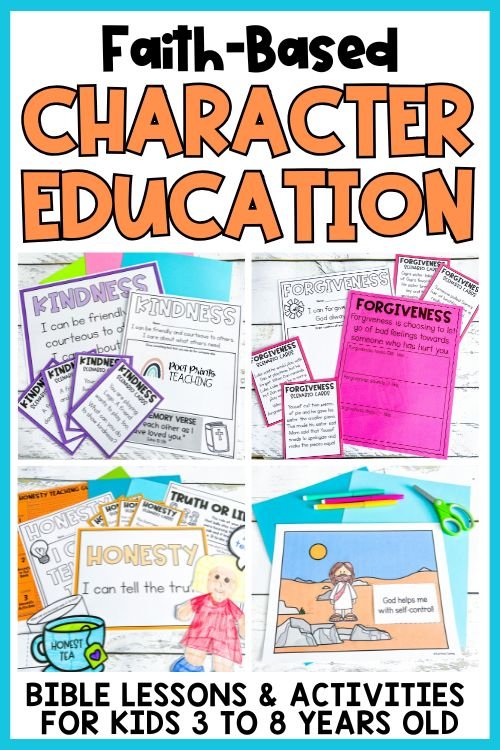
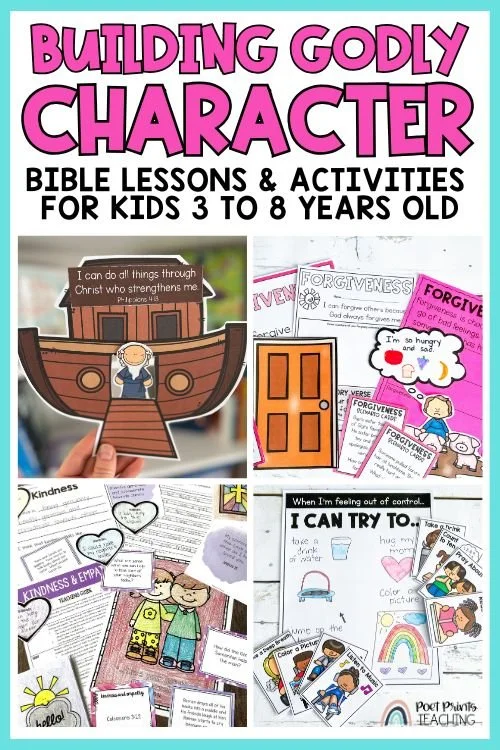
This lesson on self-control is part of a seven-part Character Education mini-series. Other lessons include contentment, kindness, courage, forgiveness, perseverance, and honesty. 

Bible-based Character Education Bundle for Kindergarten/1st grade
Bible-based Character Education Bundle for 2nd, 3rd, and 4th grades
Forgiveness Bible Lessons for Kids

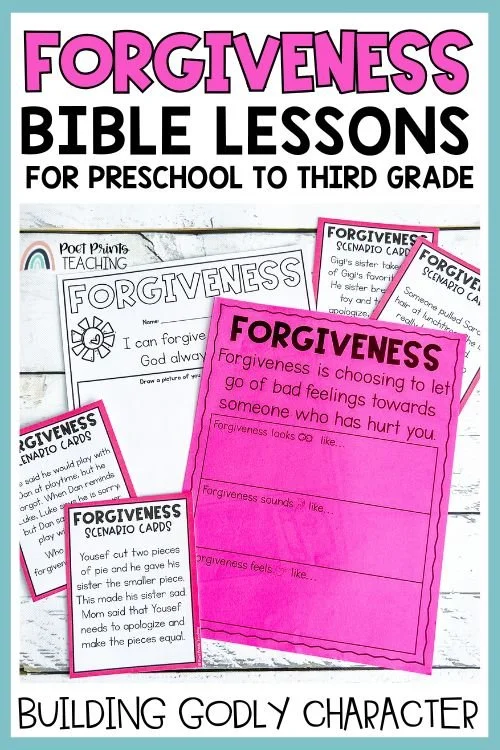
Biblical character education wouldn’t be complete without lessons on forgiveness. This includes helping children learn how to show grace, restore relationships, and follow Jesus’ example of love. Using these hands-on crafts, engaging activities, and printable lesson plans will help children better understand what forgiveness looks like in everyday life and why it matters according to Scripture.

How do you define forgiveness for kids

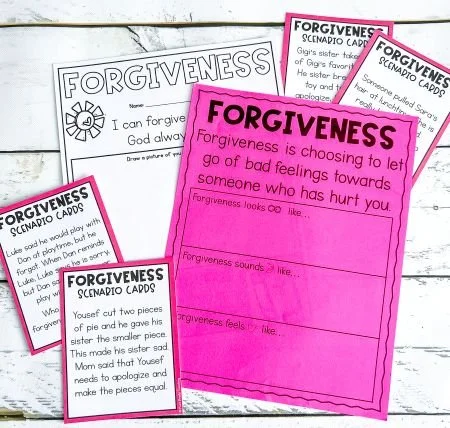
Forgiveness is choosing to let go of bad feelings towards someone who has hurt you. Forgiveness isn’t necessarily a feeling; it’s a conscious choice. It doesn’t have to be a one-time event either. Sometimes forgiveness means choosing each day to forgive the person for the harm they caused us in the past. With God’s help, we can overcome the hurt, but it might take time. 

Forgiveness is important because God calls us to forgive. When we forgive, it helps to release us from past hurts so we can move forward without bitterness.

Forgiveness Bible Lessons for Kids

Are you looking for an engaging way to teach children about the character trait of forgiveness? Use the Bible story of the Prodigal Son to help facilitate the learning. Our scripted lessons, printable crafts, and discussion questions are a great resource to help kids learn about this important character trait.

(Click HERE for the 2nd, 3rd, and 4th grade version!)

Or, shop Forgiveness Bible Lessons for kindergarten/1st grade on TpT
Or, shop forgiveness bible lessons for 2nd, 3rd, and 4th grades on tpt

WHAT DOES THE BIBLE SAY ABOUT forgiveness?

One of the core messages of the Bible is forgiveness, centred around God’s great love for us. We live in a broken world, yet God made a plan to redeem the world through Jesus. It is through Jesus that we have forgiveness from our sins and hope for a future with Him. Without Christ’s redeeming blood, we wouldn’t have forgiveness and a way back to God.

And God calls us to forgive each other, too. There are many verses about forgiveness in the Bible. Here are a few verses:

  • Psalm 103:12 – “As far as the east is from the west, so far has he removed our transgressions from us.”

  • Matthew 6:14 – “For if you forgive other people when they sin against you, your heavenly Father will also forgive you.”

  • Luke 6:37 – “Forgive, and you will be forgiven.”

  • Ephesians 4:32 – “Be kind and compassionate to one another, forgiving each other, just as in Christ God forgave you.”

  • 1 John 1:9 – “If we confess our sins, he is faithful and just and will forgive us our sins.”

Alongside Bible verses, there are also several poignant stories centred on the theme of forgiveness, including the Prodigal Son, Joseph Forgiving His Brothers, and The Unforgiving Servant.

HOW DO YOU TEACH KIDS ABOUT FORGIVENESS?

Activities to teach bigger kids about what the Bible says about forgiveness.

Take time to teach children the definition of forgiveness and explore different examples of what forgiveness looks like. These examples can include stories from the Bible where people chose to forgive, as well as modern, real-life situations kids may face. Discuss these stories and scenarios, then apply the material by having children role-play situations in which they must demonstrate forgiveness. Use hands-on crafts and activities to help them engage with the topic. Before they head home, challenge them to practice forgiveness throughout the week.

Bible Sword Drill

Using a Sword Drill to introduce children to the Bible is an effective way to help them navigate the pages of Scripture and understand the relationships among the books of the Bible. A Sword Drill is a simple exercise in which children are given a verse to look up and then must search for it. The first kid to locate the verse is the winner.

To help kids with this, show them where the Table of Contents is in the Bible. Then teach them how to locate the book in the Table of Contents, flip to the page, and search for the chapter and verse. At first, this will be a time-consuming and awkward task for kids to manage. There will be some hand-holding and guidance. But this is an important skill for kids to have, so fostering this skill is worth the time.

For printable cards with the verses, check out Forgiveness Bible Lesson for Older Kids.
BIBLE STORY about Forgiveness - The Prodigal Son

Dive into forgiveness with the parable of the Prodigal Son.

Bible stories are an effective means of teaching biblical character traits. Taking time to read a story about forgiveness, discuss it, and complete an activity that connects to the story is a great way to solidify learning. 

The story of the Prodigal Son found in Luke 15:11-32 centres around the theme of forgiveness. 

After reading the story, discuss the concept of forgiveness. Children can examine how the father in the story forgave his son completely, whereas the older brother struggled with forgiveness because he felt his brother did not deserve celebration. The older brother resented the younger brother, while the father forgave and loved.

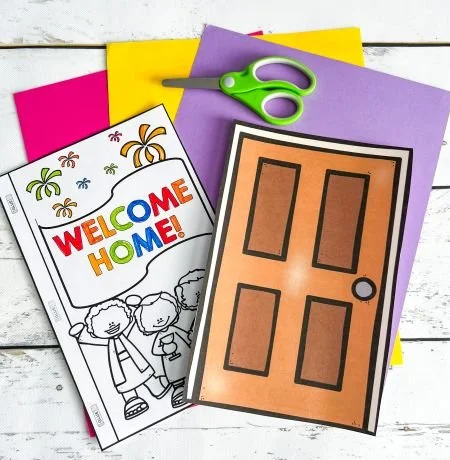
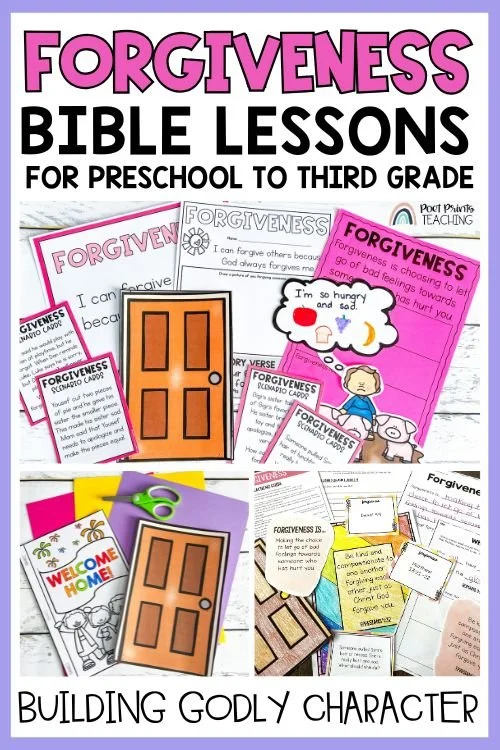
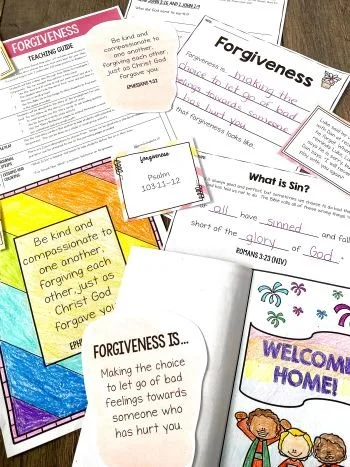
Then, do an activity to reinforce the learning. The Forgiveness Bible Lesson for Little Learners includes a simple “Welcome Home” craft to remind children of the story's conclusion, when the lost son is welcomed home with open arms and a big celebration. For this craft, they will color and cut out a picture of a door. Then they will glue this over a ‘welcome home’ scene, so the door can still open and reveal the party inside.

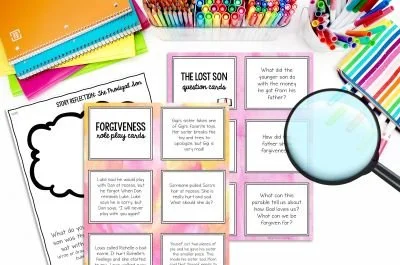
You’ll find the same printable craft in Forgiveness Bible Lessons for Older Kids, as well as a writing reflection page where kids reflect on what the prodigal son was thinking while feeding the pigs. This is also included in the Forgiveness for Little Learners, in a craft format rather than a reflection page.

Click here for more ideas on teaching the story of the Prodigal Son.

MORE Crafts and activities to teach about forgiveness

  • Forgiveness Envelope: Have kids draw a time when someone else’s actions hurt them. If they are not able to think of an idea, they are welcome to draw a hypothetical example. Then fold it up and put it in an envelope. Then pray over the envelopes and give the hurts to God, symbolizing that the child is forgiving the person who hurt them.

  • Whiteboard Eraser Illustration: Take time to brainstorm different sins and write them on a whiteboard. Try to fill the board (or a section of the board) with a lot of ideas. Then talk about how this is like the human heart. It is covered in sin. But when we ask for forgiveness, Jesus washes our sins away and forgives us. Take an eraser and start erasing the writing off the board.

  • Egg Illustration: This is similar to the one above, but it uses a hard-boiled egg. Use a Sharpie to write sins all over a hard-boiled egg. Then start peeling the egg and tell kids that when we ask Jesus for forgiveness, he takes away all the sin and we are left with a clean and soft heart.

Songs about forgiveness

Music is a powerful tool and can be a great way to help kids (and adults) reflect on a topic. Consider playing one or more of the following worship songs for children to reflect on. Give them paper to color on or play-dough to fiddle with while they listen. Some of the songs are about God’s great love for us and His forgiveness of our sins, and others are about the importance of forgiving others because God has forgiven us.

WOULD YOU LIKE MORE LESSONS to build godly character?

This lesson on contentment is part of a seven-part Character Education mini-series. Other lessons include contentment, kindness, courage, honesty, perseverance, and self-control. 

Bible-based Character Education Bundle for 2nd, 3rd, and 4th grades
Bible-based Character Education Bundle for Kindergarten/1st grade
Kindness Bible Lessons for Kids

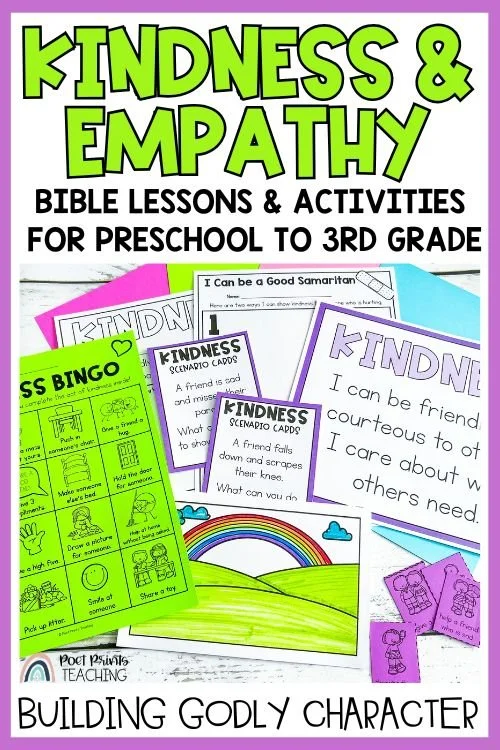
Teaching kindness and empathy to children is an essential part of Bible-based character education, helping them learn to love others as God calls us to. Through Scripture, children can learn to notice others’ needs, show compassion, and treat people with care and respect in everyday situations. This collection of ideas focuses on simple, hands-on ways to teach kindness and empathy through Bible stories, engaging crafts, and activities that make these important values easy for kids to understand and practice at home, in the classroom, or at church.

How do you define KINDNESS AND EMPATHY FOR KIDS?

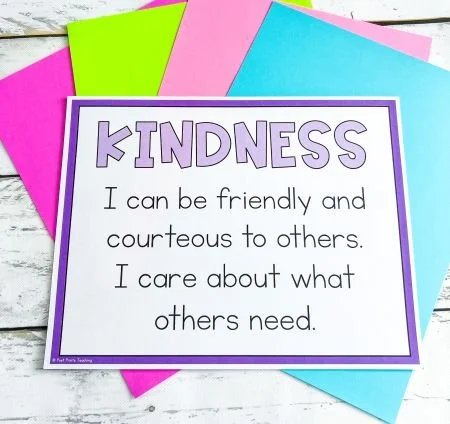
Kindness is being genuinely friendly, generous, and considerate towards others. Empathy is thinking about how another person might be feeling. These two things go hand-in-hand. Kindness is the action we show someone, and empathy is the thought process behind those kind actions. Kindness and empathy help others to see the love of Jesus.

Jesus commands us to be kind to others. Jesus set an example of kindness and empathy during his life, and he wants us to follow that example by helping others, using kind words, and treating others as we would like to be treated.

Kindness Bible Lessons for Kids

Are you seeking an engaging way to teach children about the character trait of kindness? Use the Bible story of the Good Samaritan as a springboard for learning. Our scripted lessons, printable crafts, and discussion questions are a great resource to help kids learn about this important character trait.

(Click HERE for the 2nd, 3rd, and 4th grade version!)

Or, shop Little Learners kindness and empathy lessons on TpT
Or, Bigger Kids Kindness and Empathy Lessons on TPT

WHAT DOES THE BIBLE SAY ABOUT KINDNESS?

Stories about kindness and verses about kindness appear throughout the entire Bible. Kindness is one of the Fruits of the Spirit, which God tells us to put on. When we show kindness to others, we are showing them the love of God. Kindness shows others that we are different and points people toward God. 

Kindness is something that grows as we get closer to God. It’s something that we will continue to get better at, as the Holy Spirit works in our lives. Here are a few verses about kindness:

  • Ephesians 4:32 “Be kind and compassionate to one another, forgiving each other, just as in Christ God forgave you.”

  • Colossians 3:12 “Clothe yourselves with compassion, kindness, humility, gentleness and patience.”

  • Luke 6:31 “Do to others as you would have them do to you.”

  • John 13:34 “Love one another. As I have loved you, so you must love one another.”

  • Proverbs 19:17 “Whoever is kind to the poor lends to the Lord.”

  • Hebrews 13:16 “Do not forget to do good and to share with others, for with such sacrifices God is pleased.”

HOW DO YOU TEACH KIDS ABOUT KINDNESS?

Take time to teach kids the definition of kindness and look at different examples of kindness. This could be stories from the Bible where people were kind, or this could be modern real-life scenarios. Take time to discuss these stories and scenarios. Then, get really practical and have kids act out scenarios where they need to show kindness. Do crafts and activities to help them engage with the topic. Then, before they head home, challenge them to practice kindness throughout the week! 

KINDNESS CUT AND PASTE SORTING CARDS

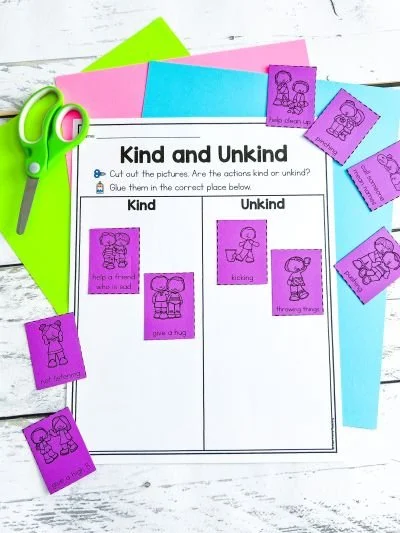
This kind vs. unkind sorting activity is a great conversation starter for littler kids.

To start the conversation about kindness and empathy, have younger kids do a cut-and-paste sorting activity. Kids will take the pictures provided in Kindness and Empathy for Little Learners and sort them onto the T-chart. Children will determine whether actions such as pinching, pushing, giving a hug, or giving a high five are kind.

This activity can serve as a springboard for discussing situations that may occur in your home or classroom. Discuss how our actions affect others, and how we should be conscious of how we treat them.


Kindness BINGO

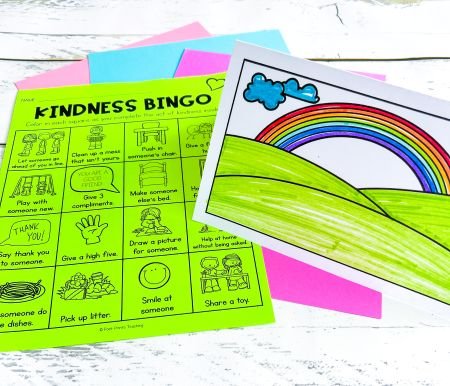
Kindness bingo makes it fun to search out kind things to do for others. There’s a version for little kids, and another for kids in 1st-3rd grades.

Many kids enjoy a challenge, especially when it’s in the form of a game. Challenge your kids to a game of Kindness BINGO. This is a multi-day activity in which kids complete random acts of kindness outlined on a simple BINGO worksheet. These acts of kindness were intended to be performed independently by children, without requiring parents or teachers to purchase anything.

You can choose to offer an incentive (class party, small candy) for completing the whole chart, or you may choose to see kindness as its own reward! There’s a version in both Kindness and Empathy Bible Lesson for Older Kids and Kindness Bible Lessons for Little Learners.

Kindness BIBLE STORY - The Good Samaritan

Bible stories are an effective way to reinforce Bible-based character traits. Taking time to read a story about kindness, discussing it, and doing an activity that connects with the story is a great way to solidify learning. 

The Good Samaritan found in Luke 10:25-37 is a great example of someone kind, and several people who are not kind.

After reading the story, discuss kindness and empathy. Kids can look at how the Samaritan treated the Jewish man who was left beaten at the side of the road. They can also examine the responses of the priest and the Levite and discuss whether their actions were kind.

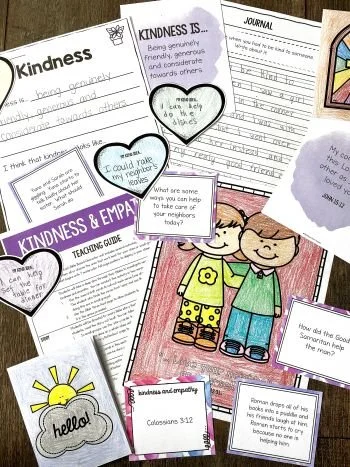
After reading the story and discussing it, do an activity to reinforce the learning. Have kids write or draw about how they can be a Good Samaritan in their neighbourhoods. For printable journal pages appropriate for second, third, and fourth grade, check out Kindness Bible Lesson for Older Kids. For pages suitable for preschool, kindergarten, and 1st grade, see Kindness Bible Lessons for Little Learners.
MORE KINDNESS Crafts and activities

  • Kindness Paper Chain: Brainstorm ideas with your kids about ways to show kindness. Then, whenever you notice a child doing something kind, write that action on a strip of paper. Connect the strips of paper to form a paper change. The children will enjoy watching the paper chain grow as more acts of kindness are added to it.
  • Rock Painting: Paint rocks and draw hearts on them, or write kind words or Bible verses on the rocks. Whenever kids see their painted rocks, it will be a visual reminder that God calls us to be kind to one another.

  • Kindness Day: Set aside a day (or a period of time) to complete a project that demonstrates kindness to an individual or a group. Brainstorm some ideas with kids and pick a project together. This could include cleaning up the playground, picking up litter on the street, making cards for seniors at a local seniors’ home, or reading books to younger children.


WOULD YOU LIKE MORE LESSONS ABOUT CHARACTER BUILDING?

This lesson on kindness and empathy is part of a seven-part Character Education mini-series. Other lessons include contentment, courage, forgiveness, honesty, perseverance, and self-control. 

Bible-Based character education lessons for kindergarten and 1st grade
Bible-based character education lessons for 2nd, 3rd, and 4th grades