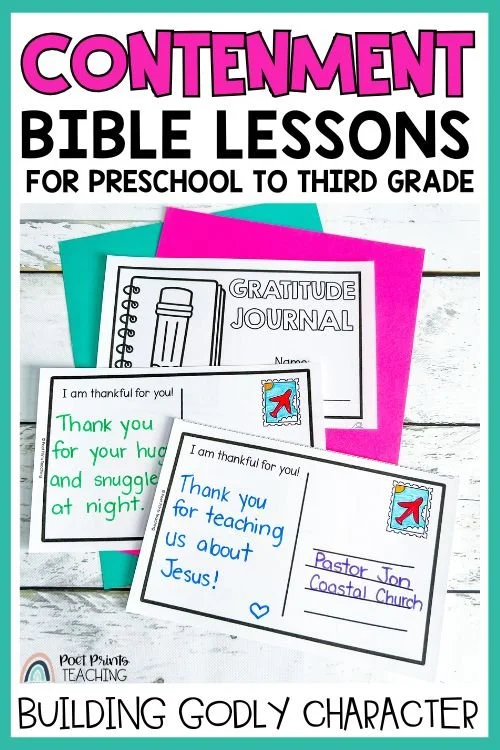
Contentment and Gratitude Bible Lessons for Kids
Teaching kids about contentment is an important component of Bible-based character education, helping them learn to be thankful and to trust God in every situation. There are many engaging, faith-filled ideas to teach contentment (and gratitude) to children through simple crafts, hands-on activities, and meaningful Bible lessons. Designed for parents, teachers, and children’s ministry leaders, these creative contentment activities make it easy to connect biblical truths with everyday life and help kids understand what it means to be satisfied with what God has given them.
How do you define contentment to kids?
Simply put, contentment is being thankful and satisfied with what you have and not wanting more. For example, contentment is playing with the toys you already have rather than wanting the newest toy your friend has. God has given us many good things, and God cares for our needs. Being content shows our gratitude to Him.
Contentment Bible Lessons for Kids
Are you searching for an engaging way to teach kids about the character trait of contentment? Use the Bible story of God Providing Manna in the Desert as a springboard for learning. Our scripted lessons, printable crafts, and discussion questions are a great resource to help kids learn about this important character trait.
WHAT DOES THE BIBLE SAY ABOUT CONTENTMENT?
The Bible teaches that contentment and trust in God go hand in hand. We can be thankful and have peace because we know that God promises to always be with us and will provide for our needs. Here are some Bible verses that teach about contentment:
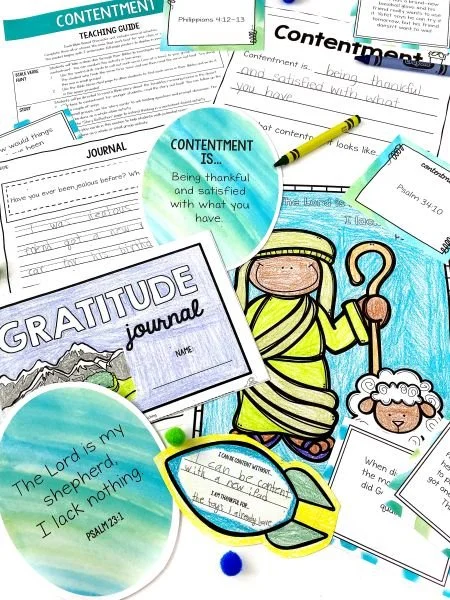
Psalm 23:1 - “The Lord is my shepherd, I lack nothing.”
God provides for our needs.
Matthew 6:28-33 - In this passage of Scripture, Jesus teaches that we need not worry about clothing, food, or the future because God cares for us. This passage is about not worrying, but it can also be connected to contentment.
Hebrews 13:5 - “Keep your lives free from the love of money and be content with what you have, because God has said, 'Never will I leave you; never will I forsake you.”
Loving God is more important than having stuff.
Philippians 4:11-13 - “I am not saying this because I am in need, for I have learned to be content whatever the circumstances. I know what it is to be in need, and I know what it is to have plenty. I have learned the secret of being content in any and every situation, whether well fed or hungry, whether living in plenty or in want. I can do all things through him who gives me strength.”
These verses teach us that Jesus helps us to be content. Contentment is something we can practice and cultivate.
HOW DO YOU TEACH KIDS ABOUT CONTENTMENT?
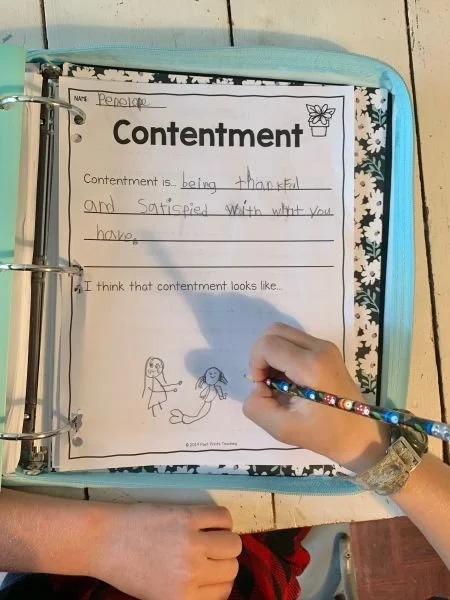
Take time to teach children the definition of contentment and examine different examples of contentment. This could be stories from the Bible in which people were content or not, or it could be modern real-life scenarios. Take time to discuss these stories and scenarios. Then, get really practical and have kids act out scenarios where they need to show contentment. Do crafts and activities to help them engage with the topic. Then, before they head home, challenge them to practice contentment throughout the week!
NEEDS VS. WANTS: CUT AND PASTE FOR PRESCHOOL
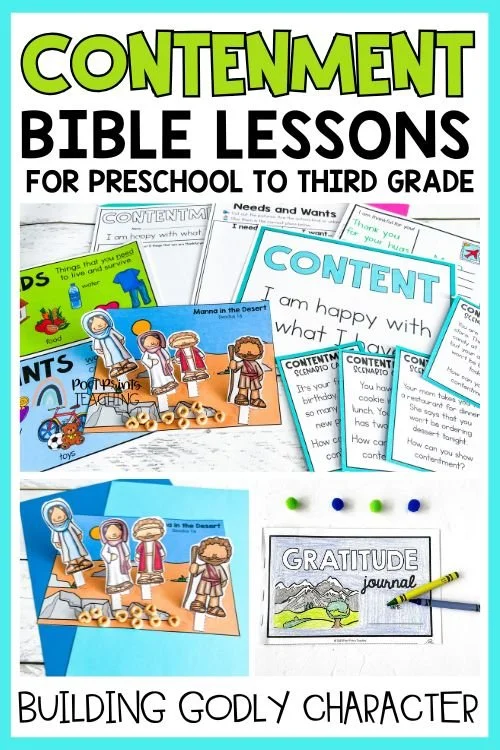
A helpful way to start teaching about contentment is to examine the differences between needs and wants. Needs are necessities for survival, such as water, food, shelter, and love. Wants are things you want to have, but can live without, such as video games, dessert, or the newest Lego set.
To help young learners distinguish between needs and wants, have them complete a simple cut-and-paste activity in which they glue pictures of their needs and wants onto a T-chart. You could use photos from a magazine, or you could use the printable version found in Contentment for Little Learners.
GRATITUDE JOURNAL
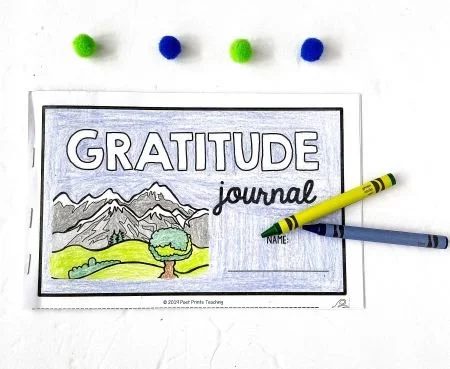
Gratitude journals are a great way to help kids think about all the blessings they have in their lives. This is often a practice around Thanksgiving, but reflecting on what we are thankful for is something we should practice throughout the year.
Take time to brainstorm ideas with your kids and then have them put their ideas into their gratitude journals. In Contentment Bible Lesson for Older Kids, you’ll find several journal options: lines, interlined, traceable words, and blank pages for pictures. This way, you can adapt the journal to meet your students’ needs.
In Contentment Bible Lesson for Little Learners, you’ll also find two versions: one with a sentence starter and then a blank space to finish the sentence, and one with traceable words so kids can trace and then draw a picture.
CONTENTMENT BIBLE STORY - Manna in the Desert
Bible stories are an effective means of reinforcing biblical character traits. Taking time to read a story about contentment, discussing it, and completing an activity that connects with the story is a great way to solidify learning.
Exodus 16 recounts God's provision of manna in the Desert. Prior to this event, God had rescued the Israelites from slavery in Egypt, and yet, the Israelites were grumbling and complaining in the desert. God sent manna and quail to satisfy the people’s hunger, and even still, the Israelites continued to grumble and complain.
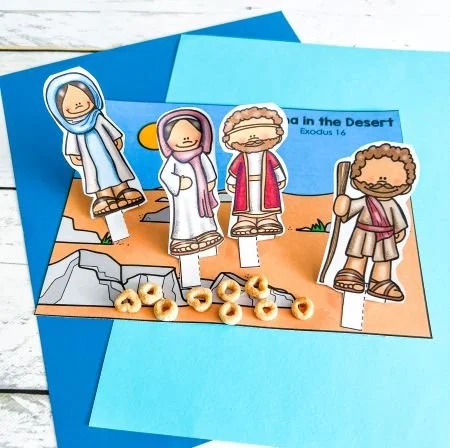
This story is a great springboard for conversations about contentment. Children can examine how the Israelites responded to God’s provision and then discuss what contentment could have looked like in this story.
After reading the story and discussing it, do an activity to reinforce the learning. Be sure to check out Contentment Bible Lesson for Older Kids for an activity in which kids draw a simple comic retelling the main parts of the story.
Check out Contentment Bible Lesson for Little Learners for an age-appropriate printable craft in which children create a scene of manna being provided each morning for the Israelites.
MORE CONTENTMENT BIBLE LESSON IDEAS
Gratitude Jar: Give kids strips of paper and a mason jar. As they think of things they are thankful for, they can write their idea on a strip of paper and then place the strip in the jar. This is a visual reminder that our lives are full of blessings, just like the mason jar is full of strips of paper.
Balloon Bouncing: Get balloons in two different colors. Blow up several balloons in each of the two colors. Tell kids that one of the colors represents being thankful, and the other color represents complaining. Have children play a game in which they must keep the “thankful” balloons in the air and let the “complaint” balloons fall to the floor.
A Backpack Illustration: Do a simple object lesson with kids where you fill a backpack with things you’ll need for a camping trip. Then ask kids if they need more things, or if the backpack has enough stuff in it. This is a great visual to show kids that we don’t need more than can fit.
Contentment Bracelets: The Meaingful Mama has a cute Contentment Game. She encourages us to make bracelets with our kids which say, “Be Content”. Then challenge your kids to go a whole day without complaining. As soon as they complain, the bracelet is confiscated for a period, after which they may try again.
WOULD YOU LIKE MORE LESSONS ABOUT building godly character?
This lesson on contentment is part of a seven-part Character Education mini-series. Other lessons include courage, forgiveness, honesty, kindness, perseverance, and self-control.